

SKIN HEALER – ANTI-INFLAMMATORY – LYMPHATIC TONIC
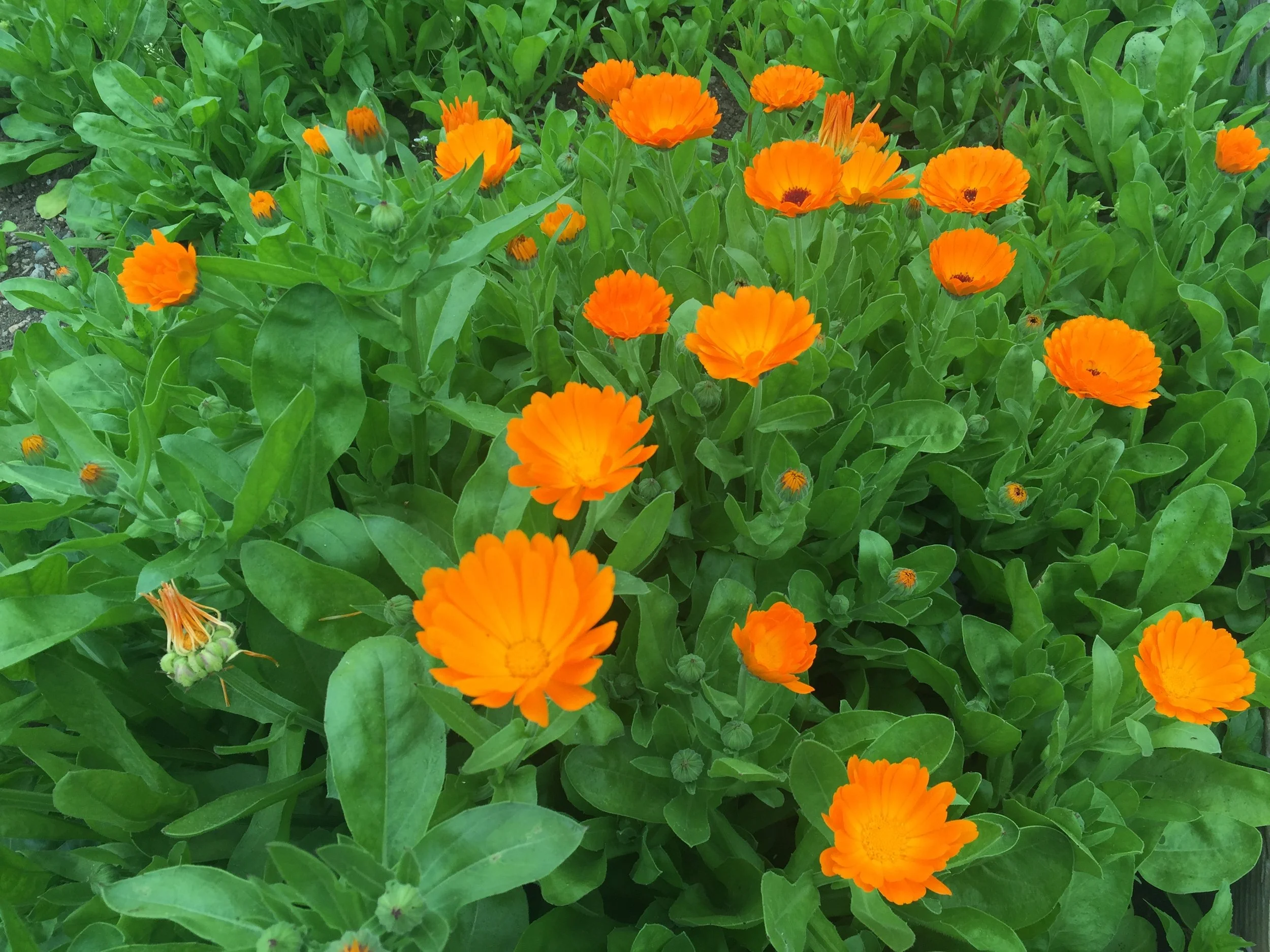
Calendula is a herb of gentle restoration—soothing, protective and quietly powerful in its ability to heal both the skin and internal tissues. With its golden petals, it brings warmth and light to areas of stagnation, inflammation and damage, supporting the body to repair, cleanse and renew.
This is a medicine that works at the surface and within—coating, calming and rebuilding tissues while moving lymphatic congestion. Where there is irritation, swelling or slow healing, calendula softens, restores and strengthens.
Indications:
Skin healing & tissue repair – Promotes wound healing, reduces inflammation and supports recovery from cuts, burns, rashes and irritated skin.
Lymphatic support – Gently moves stagnant lymph, reducing swelling and supporting immune function.
Digestive inflammation – Soothes inflamed mucous membranes in the gut, supporting conditions such as gastritis, ulcers and bowel inflammation.
Anti-inflammatory action – Reduces heat and irritation in tissues throughout the body.
Antimicrobial support – Assists in managing mild infections, both topically and internally
As a tea…
1–2 teaspoons dried flowers per cup of hot water.
Steep 10–15 minutes. Drink up to 3 cups daily.
As a tincture or glycerite
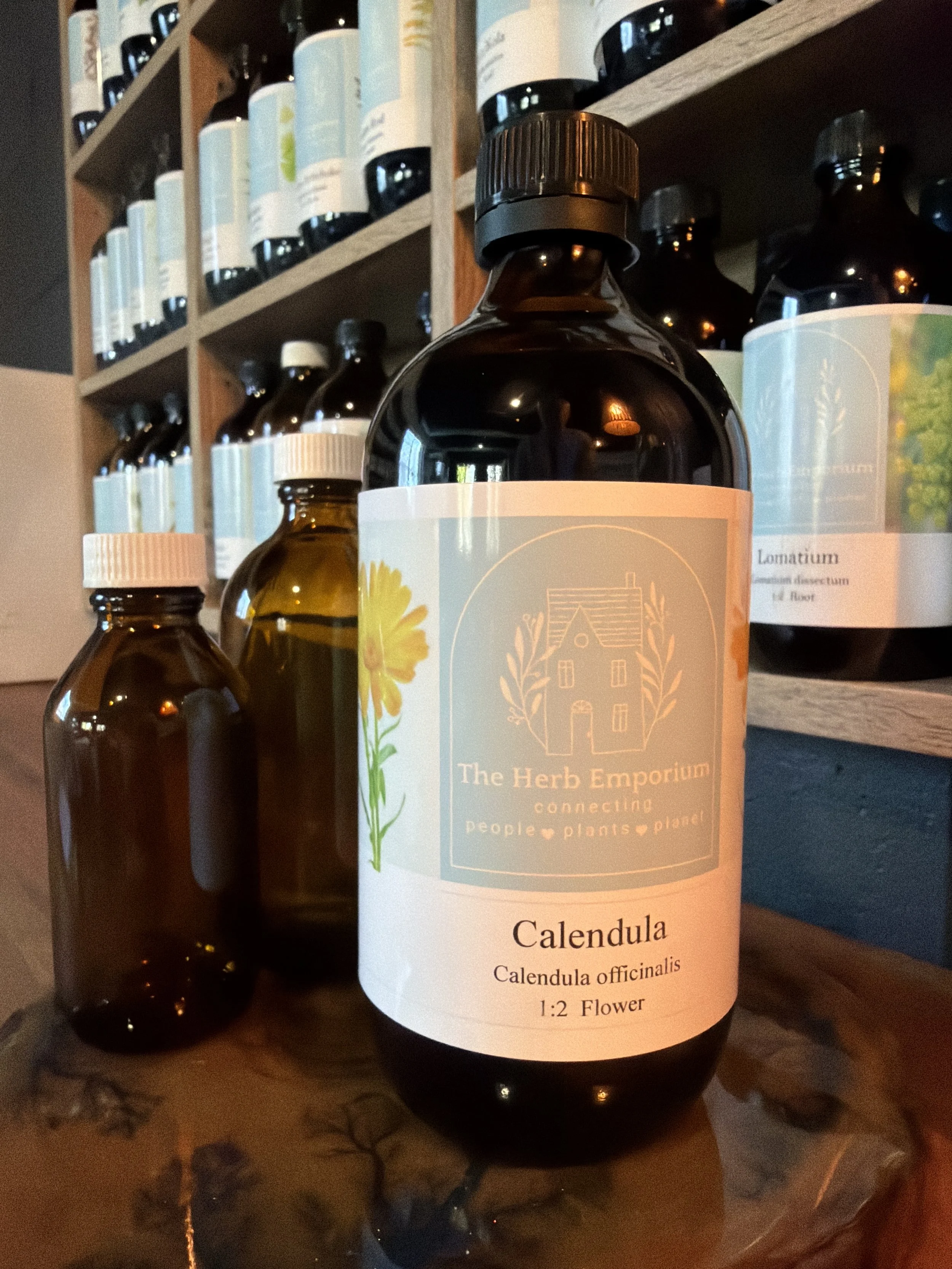
Take 1–3ml daily (approx. 10–25ml per week of a 1:2 flower tincture at 90% alcohol), or alcohol free glycerite 10 - 25ml per week (1:2 flower)
Topical use…
Infused oil, salve or poultice applied directly to skin for healing and soothing.
Most like:
Chamomile – Both soothing and anti-inflammatory. Chamomile is more calming to the nervous system; calendula is more lymphatic and tissue-toning.
Plantain – A wound healer with more mucilaginous, drawing properties. Plantain soothes wetter irritation; calendula is more drying and restorative.
Yarrow – Supports wound healing and circulation. More stimulating and dispersing; calendula is gentler and more lymph-focused.
St John’s Wort – Excellent for nerve-related skin pain and repair. Calendula is broader for general tissue healing and inflammation.
Red Root – A deeper lymphatic mover. Red root drains and clears; calendula soothes, heals and restores.
Cautions:
Asteraceae sensitivity – Use cautiously if allergic to this plant family.
Pregnancy – Avoid high internal doses unless guided by a practitioner.
Use Glycerite or tea if alcohol is to be avoided.
SKIN HEALER – ANTI-INFLAMMATORY – LYMPHATIC TONIC
Calendula is a herb of gentle restoration—soothing, protective and quietly powerful in its ability to heal both the skin and internal tissues. With its golden petals, it brings warmth and light to areas of stagnation, inflammation and damage, supporting the body to repair, cleanse and renew.
This is a medicine that works at the surface and within—coating, calming and rebuilding tissues while moving lymphatic congestion. Where there is irritation, swelling or slow healing, calendula softens, restores and strengthens.
Indications:
Skin healing & tissue repair – Promotes wound healing, reduces inflammation and supports recovery from cuts, burns, rashes and irritated skin.
Lymphatic support – Gently moves stagnant lymph, reducing swelling and supporting immune function.
Digestive inflammation – Soothes inflamed mucous membranes in the gut, supporting conditions such as gastritis, ulcers and bowel inflammation.
Anti-inflammatory action – Reduces heat and irritation in tissues throughout the body.
Antimicrobial support – Assists in managing mild infections, both topically and internally
As a tea…
1–2 teaspoons dried flowers per cup of hot water.
Steep 10–15 minutes. Drink up to 3 cups daily.
As a tincture or glycerite
Take 1–3ml daily (approx. 10–25ml per week of a 1:2 flower tincture at 90% alcohol), or alcohol free glycerite 10 - 25ml per week (1:2 flower)
Topical use…
Infused oil, salve or poultice applied directly to skin for healing and soothing.
Most like:
Chamomile – Both soothing and anti-inflammatory. Chamomile is more calming to the nervous system; calendula is more lymphatic and tissue-toning.
Plantain – A wound healer with more mucilaginous, drawing properties. Plantain soothes wetter irritation; calendula is more drying and restorative.
Yarrow – Supports wound healing and circulation. More stimulating and dispersing; calendula is gentler and more lymph-focused.
St John’s Wort – Excellent for nerve-related skin pain and repair. Calendula is broader for general tissue healing and inflammation.
Red Root – A deeper lymphatic mover. Red root drains and clears; calendula soothes, heals and restores.
Cautions:
Asteraceae sensitivity – Use cautiously if allergic to this plant family.
Pregnancy – Avoid high internal doses unless guided by a practitioner.
Use Glycerite or tea if alcohol is to be avoided.