

NERVE CALMING – MOOD STABILISING – HEART–MIND BALANCE
Passionflower is a herb of stillness within motion—cooling, calming and deeply centring to the nervous system. Where the mind is overactive and the heart unsettled, it gently draws awareness inward, softening excess stimulation and restoring rhythm.
This is a medicine for the busy mind and sensitive heart. It soothes circular thinking, eases tension held in the chest and invites restful sleep without heaviness. Passionflower reconnects the heart and mind, bringing a sense of quiet presence where there has been overwhelm, restlessness or emotional fatigue.
Indications:
Nervous system support – Calms anxiety, nervous tension and overstimulation. Particularly suited to restless exhaustion where the body is tired but the mind remains active.
Sleep support – Encourages restful sleep, especially when disturbed by mental chatter or emotional tension.
Heart–mind balance – Eases stress held in the chest, helping to settle palpitations and emotional unease.
Antispasmodic action – Relieves muscle tension, nervous spasms, digestive cramping and tension headaches.
Mood support – Gently stabilises mood, supporting mild anxiety, irritability and hormonal emotional fluctuations.
Pain relief – Offers mild support for neuralgia, headaches and tension-related discomfort.
As a tea…
1–2 teaspoons dried herb per cup of boiling water.
Steep 5–10 minutes. Drink 2–3 cups daily.
As a tincture…
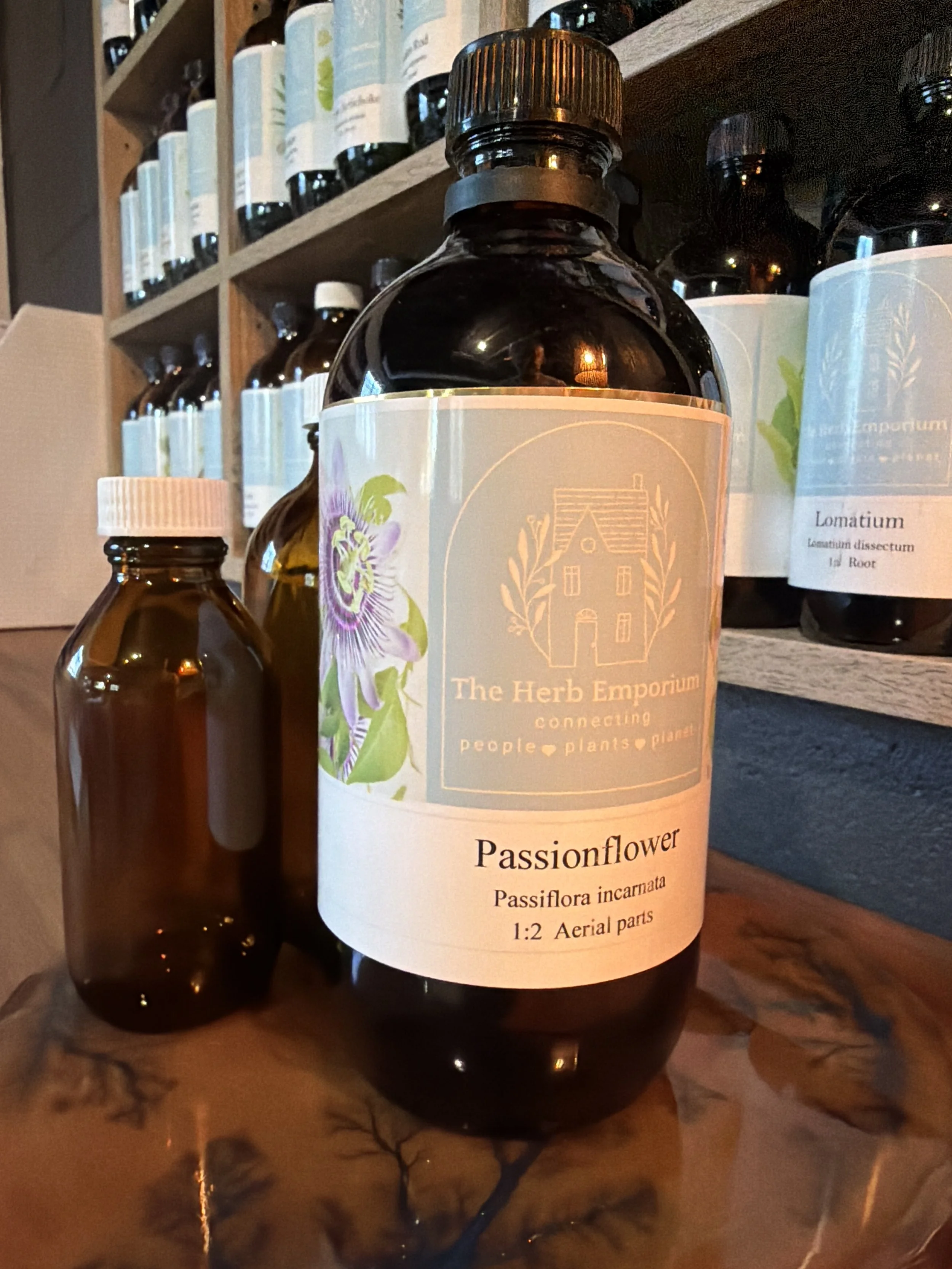
Take 2–6ml daily (approx. 15–40ml per week of a 1:2 aerial tincture, 45% alcohol).
Most like:
Chamomile – A gentle calming nervine. Chamomile is more digestive and soothing; passionflower is more specific to mental overactivity.
Skullcap – Deeply calming to an overactive nervous system. Skullcap anchors scattered energy; passionflower softens looping thoughts and heart tension.
Lemon Balm – Uplifting and calming. Lemon balm lightens mood; passionflower quiets and centres.
Hops – A stronger sedative. More deeply sleep-inducing; passionflower is gentler and non-heavy.
Valerian – A powerful sedative and nervine. More warming and potent; passionflower is cooling and more suitable for sensitive or overstimulated individuals.
Cautions:
Pregnancy – Use cautiously; high doses may stimulate uterine activity.
Sedative medications – May enhance effects; use with care alongside sleep or anxiety medications.
High doses – Excess may cause drowsiness, dizziness or mental fog.
NERVE CALMING – MOOD STABILISING – HEART–MIND BALANCE
Passionflower is a herb of stillness within motion—cooling, calming and deeply centring to the nervous system. Where the mind is overactive and the heart unsettled, it gently draws awareness inward, softening excess stimulation and restoring rhythm.
This is a medicine for the busy mind and sensitive heart. It soothes circular thinking, eases tension held in the chest and invites restful sleep without heaviness. Passionflower reconnects the heart and mind, bringing a sense of quiet presence where there has been overwhelm, restlessness or emotional fatigue.
Indications:
Nervous system support – Calms anxiety, nervous tension and overstimulation. Particularly suited to restless exhaustion where the body is tired but the mind remains active.
Sleep support – Encourages restful sleep, especially when disturbed by mental chatter or emotional tension.
Heart–mind balance – Eases stress held in the chest, helping to settle palpitations and emotional unease.
Antispasmodic action – Relieves muscle tension, nervous spasms, digestive cramping and tension headaches.
Mood support – Gently stabilises mood, supporting mild anxiety, irritability and hormonal emotional fluctuations.
Pain relief – Offers mild support for neuralgia, headaches and tension-related discomfort.
As a tea…
1–2 teaspoons dried herb per cup of boiling water.
Steep 5–10 minutes. Drink 2–3 cups daily.
As a tincture…
Take 2–6ml daily (approx. 15–40ml per week of a 1:2 aerial tincture, 45% alcohol).
Most like:
Chamomile – A gentle calming nervine. Chamomile is more digestive and soothing; passionflower is more specific to mental overactivity.
Skullcap – Deeply calming to an overactive nervous system. Skullcap anchors scattered energy; passionflower softens looping thoughts and heart tension.
Lemon Balm – Uplifting and calming. Lemon balm lightens mood; passionflower quiets and centres.
Hops – A stronger sedative. More deeply sleep-inducing; passionflower is gentler and non-heavy.
Valerian – A powerful sedative and nervine. More warming and potent; passionflower is cooling and more suitable for sensitive or overstimulated individuals.
Cautions:
Pregnancy – Use cautiously; high doses may stimulate uterine activity.
Sedative medications – May enhance effects; use with care alongside sleep or anxiety medications.
High doses – Excess may cause drowsiness, dizziness or mental fog.